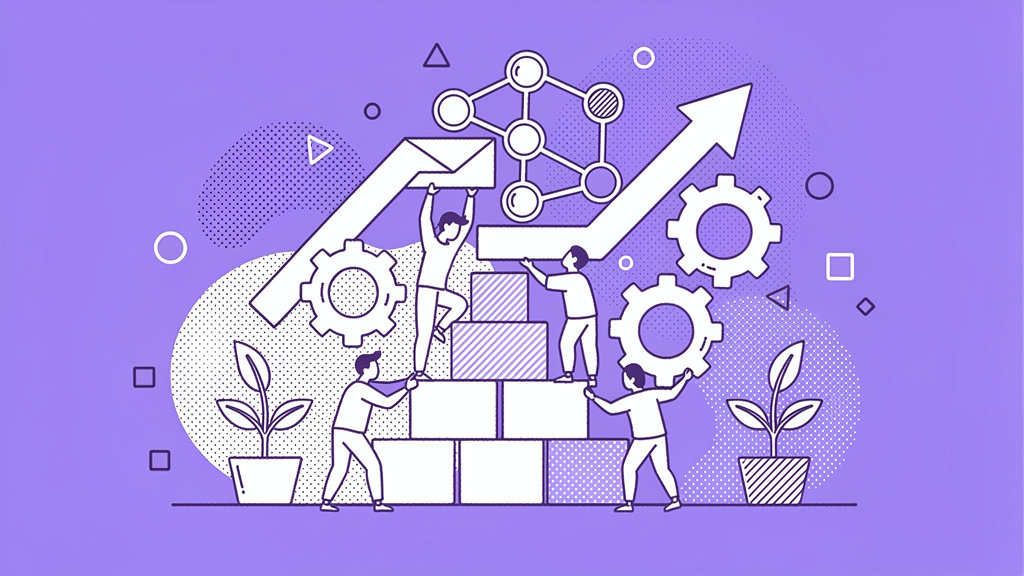
Look, if you’re running a nonprofit and you feel like you’re constantly sprinting but somehow standing still, you’re not alone. The truth is, scaling your organization isn’t about grinding harder or guilting your team into longer hours. It’s about building the kind of infrastructure that turns your good intentions into sustainable, measurable impact. We’re talking about capacity building here, the intentional investment in your people, systems, and processes that actually lets you grow without burning everyone out.
In this guide, we’ll walk through what capacity building really means for nonprofits (spoiler: it’s not just buying shiny new software), how to tackle your biggest operational bottlenecks, and why investing in the right kind of overhead might be the smartest thing you do this year.
What Capacity Building Actually Means for Nonprofits
Here’s the thing: capacity building isn’t just code for “hire more people” or “buy another tool.” It’s about creating a foundation that lets your organization do more with what you already have and scale in a way that actually sticks. We’re talking about five critical areas: people and leadership development, technological infrastructure, fundraising systems, impact measurement and evaluation, and financial management.
When you invest in capacity, you’re building staying power. You’re creating credibility and trust with donors, partners, and your community. Organizations that put resources into infrastructure aren’t just delivering impact today, they’re setting themselves up to adapt and lead tomorrow (Pivot C&DC).
Protip: Start a capacity audit today. List the top five operational bottlenecks your team faces each week. These aren’t failures, they’re exactly where your capacity-building investments should begin.
The Staffing Crisis Nobody Wants to Talk About
So let’s address the elephant in the room: staffing. It’s your number one capacity challenge right now. Get this, 68% of organizations expect demand for their services to increase in 2026, yet only 31% said they’re actually expanding how many people they serve (Independent Sector). That’s a massive capacity gap. And it gets worse. Almost 1 in 3 nonprofits struggle with retention and turnover, while 59% said it was significantly harder to fill staff positions in 2024 than in previous years (Social Current). Plus, 95% of nonprofit leaders are concerned about staff burnout, with nearly half finding it difficult to fill vacancies (Johnson Center).
What’s driving this? Well, 55% of nonprofit organizations cite the inability to offer competitive salaries as a significant challenge (Social Current). It creates this vicious cycle where talented professionals bail for better-paying sectors.
Building Staffing Capacity Means:
- investing in professional development programs that actually increase skill sets and create advancement opportunities,
- creating mentorship structures, especially for leaders of color who’ve been historically underrepresented in nonprofit leadership,
- reassessing compensation packages holistically, not just salary but benefits, flexible work arrangements, and growth pathways,
- implementing succession planning to identify and develop future leaders from within.
The Daily Struggles We Keep Seeing
In our experience at Funraise, we work with thousands of nonprofit leaders who share remarkably similar struggles before they modernize their operations. Let’s get real about what this looks like:
The Manual Data Entry Trap: Organizations spend 15+ hours weekly copying donor information between disconnected systems. Their email platform, their CRM, their accounting software, their reporting tools. Program staff become data entry clerks instead of mission drivers. Sound familiar?
The Recurring Revenue Blind Spot: Nonprofits know monthly donors are valuable but lack systems to actually convert one-time givers. They’re manually tracking recurring gifts in spreadsheets, missing opportunities for strategic upsells and losing donors to failed payment methods they never catch in time.
The Impact Communication Gap: Leadership knows their work matters, but when board members or major donors ask “what’s our donor retention rate?” or “how much did peer-to-peer campaigns raise last quarter?”, there’s no quick answer. Teams scramble to pull reports manually, often arriving at inconsistent numbers.
These aren’t technology problems. They’re capacity problems. And they’re exactly why infrastructure investment matters more than overhead ratios.
Technology as Your Capacity Multiplier
Technology transforms capacity building from a nice-to-have into a game-changer. But here’s where it gets interesting: the sector remains cautious. Only 9% of nonprofit finance leaders consider themselves “highly data-driven,” while 34% collect data but fail to fully leverage it (Sage). And get this, only 4% of nonprofit leaders feel “very confident” in their organization’s capability to leverage AI technology, with 45% unsure whether their current financial technology can even support AI (Sage).
This hesitation costs nonprofits significantly. That said, solutions exist, and they don’t require a complete technology overhaul. Nonprofits using data analytics tools raise 7x more online annually than organizations not using the tool, achieve 1.5x more in recurring revenue growth, and maintain a 12% higher average year-over-year donor retention rate (Sisense). Plus, as of 2022, only 18% of nonprofits used budgeting and planning tools, but by 2025 that figure rose to 38% (Sage). Organizations are finally recognizing these systems aren’t luxuries, they’re essential.
What Technology Capacity-Building Actually Includes:
- consolidating multiple single-purpose tools into integrated platforms to reduce training burden and improve workflow efficiency,
- implementing donor relationship management (CRM) systems that centralize all supporter interactions,
- adopting analytics dashboards that provide real-time visibility into fundraising performance and donor behavior,
- starting with one automation (like recurring donation upsells or thank-you email sequences) rather than attempting system-wide transformation overnight.
Protip: Avoid the “feature overwhelm” trap. When implementing new technology, train your team on 3 to 5 core features first. Master the basics before exploring advanced functionality. And if you’re ready to explore platforms built specifically for nonprofit fundraising, you can start with Funraise for free. No commitments, just the tools you need to scale.
Your AI-Powered Capacity Building Prompt
Ready to create a custom capacity-building roadmap for your organization? Copy and paste this prompt into your preferred AI tool (ChatGPT, Claude, Gemini, Perplexity):
"I lead a nonprofit with [ANNUAL BUDGET SIZE] and [NUMBER OF STAFF] team members. Our biggest operational challenge right now is [SPECIFIC CHALLENGE, like donor retention, manual processes, lack of data visibility]. Our mission focuses on [PRIMARY MISSION AREA].

Create a 90-day capacity-building implementation plan that addresses this challenge. Include: 1) Specific technology or process improvements to implement, 2) Staff training requirements, 3) Budget considerations, 4) Success metrics to track, and 5) Quick wins we can achieve in the first 30 days."
While general AI tools can provide strategic guidance, in your daily fundraising work it’s worth considering solutions like Funraise, which have AI functionality built directly into the platform where you’re already working. It provides full context from your donor data, campaign performance, and organizational history.
Proving Your Worth Through Data and Impact Measurement
Donors increasingly demand proof of impact, yet 56% of surveyed nonprofits struggle to communicate their impact to funders (Sowen). The barriers are real: limited staff capacity, unclear goals, overly complex evaluation frameworks, and the disconnect between mission and metrics.
Organizations without strong data systems can’t build the trust and transparency that donors now expect. But the solution isn’t adding layers of complexity. It’s starting simple.
Impact Measurement Capacity-Building Strategies:
- begin with 2 to 3 core outcomes that directly reflect your mission and measure these consistently,
- use your CRM to automatically track and report on these metrics without requiring manual data entry,
- share impact findings transparently with all donors, not just major funders. Impact communication builds deeper relationships,
- distinguish between “good overhead” (investments in data systems and staff training) and wasteful spending.
The era of penalizing organizations for investing in infrastructure is shifting. Research proposes establishing 25% as a “safe harbor” for nonprofit overhead spending (World Resources Institute). Donors now understand that talent, systems, and training create the foundation for impact.
“Philanthropic revenue is a lagging indicator of the quality of relationships your organization’s leadership has with its supporters.”
Funraise CEO Justin Wheeler
Financial Sustainability Beyond the Annual Campaign
Financial capacity is inseparable from organizational capacity. In 2025, 81% of organizations surveyed struggled to raise enough funds to cover all their costs, and 36% ended their most recent fiscal year with an operating deficit (Independent Sector). Additionally, two-thirds of nonprofit leaders reported difficulty employing enough staff for both program and administrative needs (NFF). It’s a capacity crisis, plain and simple.
Building financial capacity means moving beyond annual fundraising campaigns to sustainable, year-round donor engagement. Donors who commit to monthly gifts provide more cash each year, predictable revenue, a more engaged donor segment, and increased donor retention rates.
Capacity-Building Actions for Financial Stability:
| Strategy | Implementation | Impact |
|---|---|---|
| Recurring Giving Programs | Transition 10-15% of one-time donors to monthly giving through strategic upsells | Predictable revenue, higher lifetime value, improved retention |
| Peer-to-Peer Fundraising | Build year-round campaigns, not just emergency appeals | Expanded donor base, community engagement, reduced acquisition costs |
| Donor Segmentation | Personalize communication based on giving history and interests | Higher response rates, deeper relationships, increased average gifts |
| Wealth Screening | Identify major gift prospects in your existing database | Unlock hidden capacity, improve major gift pipeline |
| Cash Flow Forecasting | Create 12-month revenue projections with seasonal adjustments | Reduced financial stress, strategic staffing decisions, better planning |
Protip: At the heart of most organizations is capacity building through community. We’ve found that organizations investing in intimate community events (both in-person and virtual) see measurable improvements in donor retention and engagement.
The Overhead Paradox You Need to Break
The sector has long been trapped in an “overhead paradox.” Nonprofits underinvest in the very systems that enable growth, fearing donor backlash over administrative costs. This creates a vicious cycle where organizations under-report actual overhead, donors reward the “leanest” nonprofits, pressure increases to minimize overhead, and innovation stalls (Bridgespan).
But the data tells a different story. Organizations that invested in infrastructure (better data systems, staff training, streamlined processes) saw program staff reclaim up to 25% of their time previously spent on manual data collection (Bridgespan). That time went back to direct service delivery. One organization profiled increased overhead from 5% to 20% of budget, resulting in better-prepared staff and more responsive support for program sites.
Understanding “Good Overhead”:
- staff training and professional development,
- data management and evaluation systems,
- technology infrastructure and cybersecurity,
- financial management and planning tools,
- board support and governance infrastructure.
These investments directly improve program delivery and sustainability, yet they’re often considered “unnecessary” under outdated overhead ratio metrics.
Building a Community-Centered Culture
2025 was all about community, with nonprofits recognizing that long-term revenue results reflect the quality of relationships their leadership has built with supporters. Capacity building in this context means creating systems and cultures that prioritize relationships.
Community Capacity-Building Includes:
- hosting intimate fundraising events and community gatherings that deepen connection,
- implementing peer-to-peer campaigns that allow supporters to become fundraisers themselves,
- creating donor portals where supporters can manage their own giving and engagement preferences,
- using AI-powered personalization to segment communications so donors receive messages relevant to their interests,
- building transparency into how donations are used, including infrastructure investments.
And look, don’t underestimate the power of simple, human communication. Plain-text emails with personalized messages from staff members consistently outperform highly designed newsletters. Your supporters want to feel the person behind the ask, not the polish of the tool.
Your Capacity-Building Roadmap (No Overwhelm Required)
Capacity building doesn’t happen overnight, and you don’t need to solve everything simultaneously. A sustainable approach follows these phases:
Phase 1: Assessment (Weeks 1-2)
Survey staff, review operational bottlenecks, audit current technology use. Identify your biggest capacity gaps.
Phase 2: Priority Selection (Week 3)
Choose 1 to 2 areas where investment yields highest return. Staffing improvements often show fastest results, while technology impacts operations quickly.
Phase 3: Planning & Budgeting (Weeks 4-8)
Allocate budget, identify training needs, establish metrics for success. Secure buy-in from board and leadership.
Phase 4: Implementation (Months 2-4)
Roll out in phases, train staff thoroughly, celebrate early wins. Resist the temptation to do everything at once.
Phase 5: Measurement & Refinement (Ongoing)
Monitor staff efficiency gains, revenue impact, and donor retention improvements. Adjust based on results.
The most successful nonprofits treat capacity building as continuous improvement, not a one-time project. If you’re looking for a platform that grows with you through each phase, Funraise offers both free and premium tiers designed specifically for organizations at different stages of their scaling journey.
Building Infrastructure That Matches Your Ambition
Capacity building is the difference between a nonprofit that survives and one that thrives. Organizations that invest in people, systems, and processes send a powerful message to donors, partners, and staff: we’re serious about our mission, and we’re building to stay (Pivot C&DC).
The data is clear. Nonprofits that break the cycle of manual processes and invest in automation and data visibility build the foundation for sustainable growth (Sage). The overhead traditionally viewed as “wasteful” is often the exact investment that unlocks impact. When nonprofits invest in financial management systems that provide strategic insights, they contribute to organizational sustainability while building the capacity needed to serve more people (Independent Sector).
Your good intentions deserve infrastructure that matches their ambition. Start today with one capacity-building investment, whether it’s a staff development program, a new data system, or a commitment to transparent overhead spending. Your future impact will thank you.
About the Author

The Modern Nonprofit Business Plan Template: Built for Agility and Tech
The Modern Nonprofit Business Plan Template: Built for Agility and Tech Look, we've all seen those traditional nonprofit business plans gathering dust on shelves while the world moves at digital speed. You know the type: rigid, multi-year documents built on assumptions that evaporate the moment economic headwinds shift or a major donor changes priorities. Here's…
How to Use Data-Driven Nonprofit Strategic Planning to Move the Needle
If you've sat through a strategic planning session where decisions were made on "what feels right" rather than what the data shows, you're not alone. Too many nonprofits still plan based on gut feelings, board member hunches, or the dreaded "we've always done it this way" mentality. But here's the reality: data-driven nonprofit strategic planning…