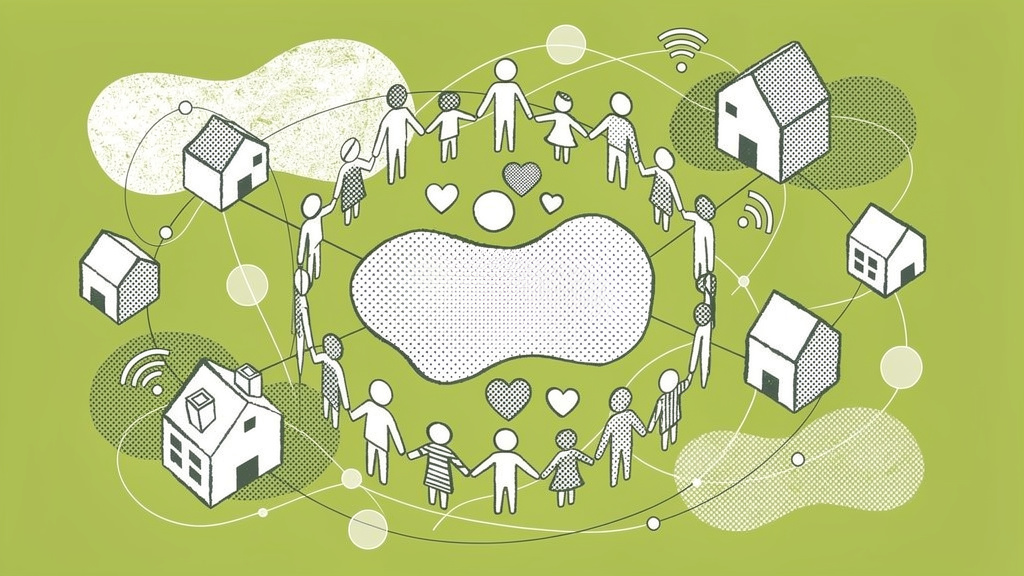
Systemic Scaling: Shifting from Institutional Care to Tech-Enabled, Community-Based Family Support
Look, the child welfare sector is facing a moment we can’t ignore anymore. Right now, more than 33,000 youth are living in institutions or group homes instead of with families, even though we know family-based care works better (Casey Family Programs). And here’s the thing: technology is finally making it possible to scale what we’ve always known was right.
For those of us leading nonprofits in this space, the shift to community-based family support isn’t just morally imperative. It’s an operational opportunity we can actually execute using modern tools that turn good intentions into measurable impact. So the question isn’t whether to make this transition, but how.
The True Cost of Institutional Settings
Institutional care prioritizes containment over connection, and the damage shows up in hard numbers. Kids in these settings face 28% hospitalization rates compared to just 13% in foster homes (California Assembly Committee on Human Services). The developmental toll? Equally stark. Children in family-based care hit 85% or higher on key developmental benchmarks by 18 months, while those in institutions lag significantly behind (Faith to Action).
Then there’s the financial piece. Institutional placements typically cost 2-3 times more per child than family support models, draining budgets that could fund prevention and community strengthening instead (Casey Family Programs). With 343,077 children in US foster care as of 2023 (California alone accounting for 43,095), the scale of this inefficiency becomes impossible to ignore (Christian Alliance for Orphans, USAFacts).
Protip: Conduct a quarterly placement audit using simple spreadsheet trackers. Figure out what percentage of your current cases involve institutional settings versus family placements. If institutions exceed 10% of placements, you’ve found your immediate optimization target.
Why Family-Based Care Delivers Superior Outcomes
The evidence for family-based care vs institutional care isn’t marginal. It’s overwhelming.
Developmental Advantages
Stable family placements reduce mental health symptoms and boost cognitive growth, with the strongest effects showing up during adolescence (American Psychiatric Association). Strong attachment relationships cut re-entry risks by up to 50% in longitudinal studies.
Financial Efficiency
Family support models slash long-term expenses by promoting permanency. The average foster care stay spans 22 months, but family-focused prevention models shorten this timeline significantly (Casey Family Programs).
Community Resilience
Kinship and foster networks build protective factors that extend beyond individual placements. Instead of creating institutional dependencies, community-based models create sustainable support ecosystems.
Nearly half a million children across Europe and Central Asia live in residential care facilities (UNICEF), but US nonprofits have the opportunity to lead a different path. One powered by technology that makes family support genuinely scalable.
Daily Struggles We See in Child Welfare Nonprofits
Before organizations embrace integrated technology solutions, we witness recurring patterns that hamstring even the most dedicated teams.
The Spreadsheet Spiral: One executive director we talked to managed 800+ families across 12 counties using nothing but Excel and sticky notes. When a potential kinship match emerged, it took three days to verify eligibility and coordinate services. By which time the family had withdrawn.
Donor Data Disconnect: A foster care recruitment nonprofit ran separate systems for case management and fundraising. When a major donor asked about outcomes for families she’d supported, staff needed two weeks to manually correlate donation records with placement data. The donor didn’t renew.
Campaign Chaos: During a critical year-end push, another organization sent the same family five different donation appeals because their email platform didn’t sync with their CRM. The embarrassment cost them their largest recurring donor.
These aren’t edge cases. They’re symptoms of fragmented systems that prevent scaling. The shift to integrated platforms isn’t about technology for its own sake. It’s about removing the operational friction that keeps good programs small.
Tech Tools Transforming Family Support at Scale
Technology converts nonprofits from reactive placement services into proactive family strengthening hubs. The right tools create systemic scaling by connecting three critical functions: donor management, case coordination, and community engagement.
| Tech Category | Key Capabilities | Scaling Impact | Source |
|---|---|---|---|
| Integrated CRM/Fundraising | Unified donor/case tracking, automated appeals | 73% avg online revenue growth; 50% form conversion rates | Funraise |
| AI-Driven Matching | Geo-mapping risks/resources, predictive analytics | 2x faster family-provider connections | Casey Family Programs |
| Engagement Automation | SMS/email sequences, P2P campaign tools | 52% recurring revenue growth year-over-year | Funraise |
| Impact Dashboards | Real-time outcome tracking, forecasting | Identify at-risk families 3-4 weeks earlier | Sisense/Funraise |
Organizations using Funraise specifically report online giving growing 3x faster than industry averages, with P2P fundraisers raising double the sector norm (Funraise). When Safe Families for Children adopted Funraise forms, they achieved double triple-digit success in their hosting program, keeping vulnerable families together short-term and avoiding institutional placements entirely (Case Studies).
“The nonprofits winning today aren’t just working harder. They’re eliminating the friction between intention and action through integrated systems that let teams focus on families instead of data entry.”
Funraise CEO Justin Wheeler
Protip: Start with a platform offering both free and premium tiers so you can test functionality without commitment. Funraise’s free tier provides surprisingly robust capabilities for smaller organizations, with seamless scaling as your family support network grows.
Blended Scaling Strategies That Work
Effective scaling of community support models combines proven approaches rather than betting on a single methodology.
Rolling Cohort Training: Recruit and train foster families in quarterly waves, creating peer support networks that reduce dropout rates by 30-40%. This UK-inspired model leverages backbone organizations to maintain quality while expanding reach.
Cascading Dissemination: Partner with county agencies to implement evidence-based programs like KEEP (Keeping Foster and Kin Parents Supported and Trained), which demonstrably reduces out-of-home placements through structured parent coaching.
Coalition-Based Geo-Mapping: Use census data and community surveys to identify underserved areas, then build hyperlocal partnerships. Forward Janesville created a responsive child care directory that boosted provider visibility and family access, showing how simple tech interventions multiply community capacity (Foremost Media).
Unconventional Accelerator: Gamify foster parent recruitment with mobile apps that award badges for training milestones, redeemable for family stipends or respite care credits. This approach mirrors successful P2P fundraising mechanics that tap competitive and collaborative motivations simultaneously.
AI-Powered Workflow Optimization Prompt
Ready to apply AI to your family support operations? Copy and paste this prompt into ChatGPT, Claude, Gemini, or Perplexity, customizing the variables in brackets:
I lead a [ORGANIZATION TYPE, e.g., foster care nonprofit] serving [NUMBER] families in [GEOGRAPHIC AREA]. Our current challenge is [SPECIFIC PROBLEM, e.g., 'matching kinship caregivers with culturally appropriate support services within 48 hours'].

Analyze this workflow and recommend:
1. Three technology interventions under $5,000 annually that would reduce response time by 50%
2. Data points we should track to measure improvement
3. A 90-day implementation timeline with quick wins in the first 30 days
4. Potential partnerships with [LOCAL RESOURCE TYPE] that could accelerate adoption

Format recommendations as an action checklist with priority rankings.
While standalone AI tools provide helpful analysis, consider solutions like Funraise that embed AI functionality directly into your daily workflows. They provide full context from your donor database, case notes, and campaign history without requiring data exports or privacy-compromising uploads.
Real-World Evidence: Organizations Making the Shift
Safe Families for Children leveraged Funraise’s conversion-optimized forms to double their hosting program revenue, enabling short-term placements with volunteer families that prevent institutional care (Case Studies).
Action Against Hunger achieved a 78% conversion lift using pop-up donation forms, redirecting funds from overhead-heavy institutional models to community-based aid (Funraise).
These organizations demonstrate that tech for child welfare nonprofits isn’t about flashy innovation. It’s about removing friction from proven family support models so they can reach more people faster.
Funraise users collectively experienced 77% online revenue growth during economically challenging years, with recurring donors giving an average of $40 monthly versus the industry standard of $21 (Funraise). That difference funds approximately one additional foster family support package per donor annually.
Overcoming Implementation Barriers
| Challenge | Tech-Enabled Solution | Expected Impact |
|---|---|---|
| Foster parent recruitment shortages | Virtual reality training simulations reduce barrier to entry | 30% faster onboarding timelines |
| Funding volatility | AI-optimized campaigns with predictive send times | 73% donation growth potential |
| Cross-agency data silos | Open API integrations between CRM and state systems | 20% reduction in placement re-entry |
| Rural service gaps | Mobile-optimized family matching with SMS coordination | Expanded kinship placements in underserved areas |
The system of care approach emphasizes culturally competent, locally-rooted support (PMC). Technology doesn’t replace this human-centered work. It amplifies it by handling coordination logistics that previously consumed staff time.
Protip: Implement wealth screening features in your CRM to identify major donors with personal connections to foster care or family preservation. A single targeted ask to the right prospect can fund 10 comprehensive family matches, but only if your data reveals the connection.
Building Your Tech-Enabled Roadmap
Phase 1: Assessment (Month 1)
Map your current institutional vs. family placement ratio. Audit your technology stack for redundancies and gaps. Survey families and caseworkers about pain points.
Phase 2: Foundation (Months 2-3)
Adopt an integrated CRM platform for donor management and basic case tracking. Migrate historical data with help from implementation specialists. Train your core team on automation features.
Phase 3: Activation (Months 4-6)
Launch P2P campaigns tied to specific family support needs. Implement dashboards tracking permanency rates and family outcomes. Build community coalition partnerships for data sharing.
Phase 4: Optimization (Months 7-12)
Add AI-powered donor segmentation and predictive matching. Distribute tablets or smartphones to foster families for real-time communication. Scale successful pilots to additional service areas.
Organizations can start this journey today with Funraise’s free tier. No commitment required, full access to core features that nonprofits use to grow online giving 3x faster than industry averages.
The 2026 Outlook for Family Support Technology
AI personalization will dominate the next 18 months, with systems suggesting optimal family matches based on dozens of compatibility factors and automatically drafting culturally-tailored donor appeals (Engaging Networks).
Privacy-first architecture will become non-negotiable as regulations tighten around vulnerable population data. Cloud-based CRMs with role-based access and encryption will separate leaders from laggards.
Tool consolidation will accelerate as nonprofits reject fragmented systems. Platforms offering embedded analytics (like Funraise’s partnership with Sisense that helped boost fundraising 7x for some users) will win because they eliminate context-switching (Sisense).
Tech-savvy nonprofits already report feeling more optimistic and better prepared for sector challenges than peers using outdated systems (NonProfit PRO). This confidence gap will widen as AI and automation become standard expectations rather than competitive advantages.
Bold prediction: By 2027, organizations that haven’t integrated donor management with case coordination will lose 30% market share to those that have, as funders increasingly demand real-time impact reporting.
From Intention to Impact
The shift from institutional care to tech-enabled community-based family support isn’t a distant aspiration. It’s happening now in organizations that prioritize operational efficiency as much as mission passion. The tools exist. The evidence is clear. The only question is execution speed.
Your community has families who could provide care tomorrow if matching happened faster. You have donors ready to give more if they saw direct connections to outcomes. You have staff burning out on administrative tasks that technology should handle.
Start where you are. Test Funraise’s free tier this week. Map your institutional placement percentage tomorrow. Identify one family support process that technology could accelerate by 50%.
Good intentions built the current system. Measurable action powered by smart technology will build the next one. And the families waiting deserve nothing less.
About the Author

Beginner's Guide to Claiming Your Nonprofit Property Tax Exemption
Look, property tax exemptions might be one of the most overlooked opportunities in the nonprofit world. While you're busy optimizing overhead ratios and perfecting donor acquisition strategies, there's this straightforward way to redirect thousands of dollars annually toward your actual mission. We're talking serious money here. Back in fiscal year 2009, U.S. property tax revenues…
Modern Humanitarianism: Why Digital Logistics and Local Procurement Trump Traditional In-Kind Aid
So here's the thing about modern humanitarian aid: we're still shipping blankets halfway around the world when there's a perfectly good blanket factory down the road from where they're needed. Look, traditional in-kind aid (you know, collecting donations and physically shipping stuff overseas) made sense in a different era. But digital logistics and local procurement…

Sustainable Scaling: Balancing Burn Rates and Long-Term Operational Efficiency in Growing Nonprofits
Sustainable Scaling: Balancing Burn Rates and Long-Term Operational Efficiency in Growing Nonprofits Growth feels like success. More programs, more staff, more impact, right? But here's the uncomfortable truth: unchecked expansion is draining nonprofits dry. When your burn rate outpaces your revenue, you're not scaling sustainably. You're building a house of cards. At Funraise, we've spent…