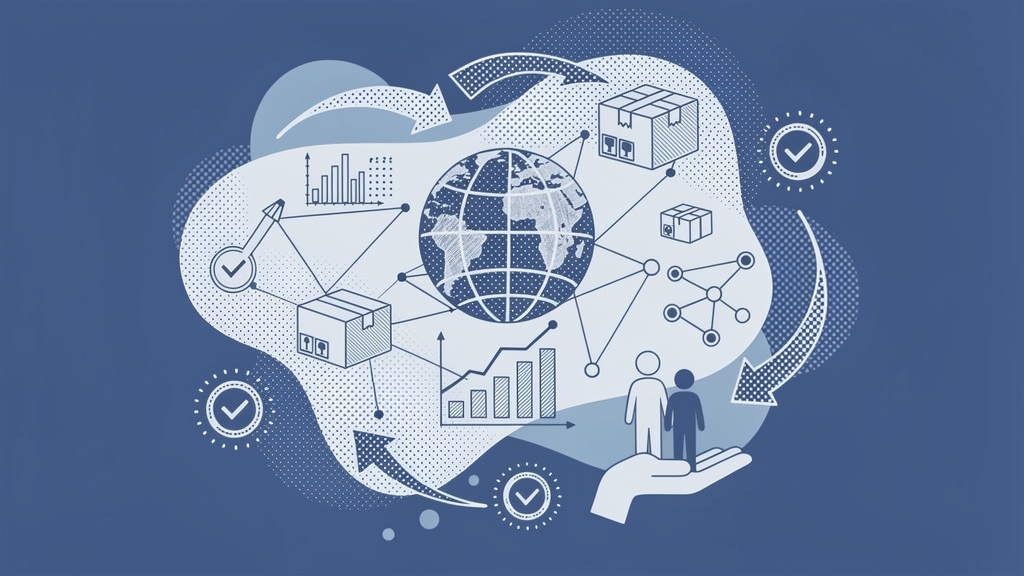
Good intentions don’t deliver medical supplies to disaster zones. Technology does. And while we pour our hearts into global aid missions, here’s the uncomfortable truth: massive resources never reach those who need them. Not because of malice, but because we’re tracking $50,000 medication shipments with systems that barely qualify for managing a garage sale.
But here’s where it gets interesting. Supply chain technology is finally catching up to nonprofit ambition, offering tools that match resources to real-world needs rather than best guesses made in distant headquarters. In this piece, we’ll explore how AI, blockchain, and IoT sensors are closing the gap between what we intend to deliver and what actually arrives, plus practical ways you can start using these tools without blowing your budget.
The Hidden Costs When Logistics Fall Apart
Look, the numbers tell a sobering story. A UN agency documented 176 tons per year of reproductive health kits wasted due to damage or expiration (IFRC Report). These aren’t cheap items, they’re life-saving resources rotting in warehouses because tracking systems couldn’t flag temperature failures or approaching expiration dates.
And it gets worse. The Centre for Global Development found no measurable progress in reducing duplication in foreign aid from 2008-2012 (Centre for Global Development). Recipient countries received overlapping shipments while other needs went unfilled. This isn’t just inefficiency, it actively burdens communities already struggling to coordinate crisis responses.
Unsolicited donations? They create environmental disasters. Clothing piles grow into mountains at disaster sites, eventually rotting and creating public health hazards (UCLA Anderson Review). Solid waste from aid packaging overwhelms fragile communities that lack disposal infrastructure (USAID Packaging Report). We’re literally shipping problems along with solutions.
Protip: Before launching your next aid campaign, audit what recipients actually requested versus what donors want to give. The gap between these two lists reveals where good intentions diverge from real needs.
The Daily Struggles We Keep Seeing
In our experience working with nonprofit leaders, the same logistics nightmares keep coming up. One international health organization tracked shipments through 14 different Excel spreadsheets maintained by different team members across three continents. When a container went missing in transit, it took 11 days just to confirm what was inside it.
Another group discovered they’d shipped winter coats to a tropical region experiencing flooding. Not because staff were incompetent, but because donor restrictions and siloed databases prevented real-time communication between fundraising and distribution teams. The coats sat unused while donors wondered why their “impact reports” felt generic.
We’ve watched talented program directors spend 40% of their time manually updating stakeholders on shipment status instead of coordinating actual relief work. One executive director told us she maintained separate logins for fundraising software, inventory management, donor CRM, and logistics tracking. None of them talked to each other.
The pattern’s pretty clear: fragmented systems create fragmented impact, no matter how dedicated your team is.
Technology That Actually Works in the Field
So what’s actually making a difference? Three categories are transforming aid logistics: AI-powered analytics, blockchain tracking, and IoT sensors. And look, these aren’t futuristic concepts. They’re operational today in field conditions.
AI processes fragmented data streams to spot patterns human eyes miss. UNICEF’s West Africa dashboard analyzes therapeutic food distribution, flagging bottlenecks before they become crises (World Economic Forum). Instead of reacting to stockouts, program managers now prevent them.
Blockchain creates tamper-proof tracking from manufacturer to final delivery. Pilots running from Pakistan to Dubai integrate satellite data, giving every stakeholder real-time visibility (Frontier Tech Hub). When donors ask “where’s my contribution?”, you can show them the exact GPS coordinates.
IoT devices like GeoSeals provide automatic alerts when containers are opened or diverted in remote areas. In Ethiopia, these sensors cut delivery delays by auto-detecting tampering without requiring field staff to manually check seals (Frontier Tech Hub).
| Technology | Core Benefit | Example Impact |
|---|---|---|
| AI & Dashboards | Predictive risk alerts | UNICEF reduced delivery disruptions (WEF) |
| Blockchain | Transparent tracking | End-to-end aid accountability (Frontier Tech Hub) |
| IoT Sensors | Real-time monitoring | GeoSeals auto-detect tampering in remote areas (Frontier Tech Hub) |
| Cloud Inventory | Stock optimization | Nonprofits cut waste via real-time data (Supply Chain Project) |
Protip: You don’t need a million-dollar budget to start. Place low-cost IoT tags on your highest-value shipments first, then expand based on what you learn. Pair tags with free visualization tools before investing in premium dashboards.
When Tech Actually Delivers Impact
Ukraine’s medical aid crisis demanded instant solutions. A ServiceNow platform automated medical supply requests across multiple NGOs, slashing lost deliveries to near zero while giving donors real-time monitoring capabilities (Teivas Systems). Previous coordination happened via WhatsApp and email, which meant resources disappeared into black holes regularly.
The Supply Chain Project offers nonprofits cloud-based inventory management and access to corporate repurposed goods. Organizations using the platform match surplus from Fortune 500 warehouses directly to verified needs, eliminating the “let’s ship what we have” approach (Supply Chain Project).
NetHope’s digital inclusion programs enhance frontline logistics coordination, connecting field teams with expertise and data they couldn’t access previously (NetHope).
And here’s where fundraising technology intersects directly with supply chain efficiency: nonprofits using Funraise analytics raise 7x more online annually compared to those without analytics (Sisense Case Study). That revenue growth doesn’t just sit in accounts. It funds better logistics infrastructure, real-time tracking systems, and professional supply chain staff instead of relying on overstretched program managers.
“The nonprofits winning today aren’t chasing the newest shiny tool. They’re consolidating fragmented systems into unified platforms that let teams focus on mission instead of managing software chaos.”
Funraise CEO Justin Wheeler
AI Prompt for Your Next Aid Campaign
Ready to optimize your next shipment? Copy this prompt into ChatGPT, Claude, Gemini, or your preferred AI tool:
I'm coordinating aid delivery for [CRISIS/REGION]. We plan to ship [RESOURCE TYPE] to [DESTINATION]. Our budget is [AMOUNT], and we need delivery within [TIMEFRAME].

Please analyze:
1. What logistical bottlenecks typically affect this route/region?
2. Which tracking technologies would provide best ROI for our budget?
3. What local coordination partners should we contact?
4. What compliance/regulatory requirements might delay shipment?

Provide a prioritized action checklist.
For daily operations, consider platforms like Funraise that integrate AI directly into your workflow. Not as a separate tool requiring copy-paste, but embedded where you’re already working with full context of your donors, campaigns, and resources. Start free at funraise.org with zero commitment to see how consolidation accelerates decision-making.
From Audit to Scale: A Phased Approach
In our experience, phased rollout prevents overwhelm while building momentum:
Phase 1: Audit Current State (Week 1-2)
Map every touchpoint from donor commitment to final delivery. Where do shipments wait? Which data lives in someone’s email versus shared systems? Free tools like process mapping templates reveal bottlenecks costing thousands monthly.
Phase 2: Pilot Integration (Month 1-3)
Connect cloud CRMs with basic IoT tracking for one high-priority shipment route. The Supply Chain Project and similar platforms offer low-barrier entry (Supply Chain Project). Train core team members on dashboards, prioritizing mobile apps for field access (Frontier Tech Hub).
Phase 3: Scale and Collaborate (Month 4+)
Join consortia like the Global Supply Resilience Initiative to share anonymized data with peer organizations (World Economic Forum). Implement blockchain for donor-visible tracking, starting with highest-value or most-restricted grants.
Here’s an unconventional approach we’ve seen work: gamify tracking by giving volunteers AR apps to scan QR codes on aid packages. You’ll crowdsource real-time data while engaging communities in transparency. Recipients become active participants rather than passive receivers.
Protip: Benchmark your logistics performance against peers through NetHope audits. The data often reveals that your “technology problem” is actually a process problem, which is cheaper to fix and faster to improve.
Getting Past the Usual Barriers
Cost concerns dominate objections to new tech, which makes sense. But start with corporate in-kind donations. Major logistics companies donate warehouse space, transportation, and expertise through platforms like ALAN (Supply Chain Management Review). Your “implementation budget” might actually be zero.
Data silos fragment visibility across organizations. Pre-competitive consortia allow anonymized sharing without exposing competitive information (World Economic Forum). When five NGOs all serving the same refugee population share transportation data, route efficiency jumps 30%+ without anyone revealing donor lists.
Staff turnover erases institutional knowledge, especially around complex tech systems. Funraise data shows platform consolidation reduces this vulnerability. Fewer logins, unified training, clearer workflows (Funraise Trends). When team members leave, replacements ramp up in days rather than months.
| Barrier | Solution | Expected Gain |
|---|---|---|
| Data Fragmentation | AI integration platforms | Actionable insights (WEF) |
| Cost Constraints | Corporate in-kind partnerships | Zero added expense (Supply Chain Project) |
| Coordination Gaps | Blockchain shared ledgers | Swift trust building (PMC Study) |
| Regulatory Complexity | Interoperable agile systems | Faster compliance (NetHope) |
What’s Coming Next
By 2026, AI convergence and public-private partnerships will define successful humanitarian logistics (World Economic Forum). Organizations still operating on 2020 technology stacks will struggle to compete for grants as donors demand real-time impact verification.
Predictive systems will prevent waste before it happens. Environmental sustainability KPIs embedded in logistics dashboards will track carbon footprints, appealing to eco-conscious donors and reducing disposal burdens on recipient communities (Ivy Science).
Autonomous AI agents might soon handle routine rerouting decisions. Similar to how Funraise’s Appeal AI optimizes fundraising language (Funraise Trends), logistics AI could automatically shift shipments based on real-time needs assessments.
The trend toward consolidation accelerates. Nonprofits using Funraise grew online revenue 73% on average, 3x the industry standard, by unifying fragmented tools (Funraise Growth Statistics). That same consolidation principle applies to supply chains. Single platforms beat duct-taped integrations every time.
Protip: Embed sustainability metrics in your tech dashboards now, before donors demand them. Track packaging waste, carbon per delivery, and disposal support provided to recipients. Forward-thinking reporting becomes your competitive advantage.
Where Technology Meets Compassion
Look, technology doesn’t replace human compassion. It amplifies it. Every dollar wasted on duplicate shipments, every medication spoiled in transit, every community buried under unusable donations represents intentions that never became impact.
Supply chain technology transforms good intentions into accountable delivery. AI prevents bottlenecks. Blockchain proves resources arrived. IoT sensors catch problems before they become disasters. Cloud platforms connect surplus to need without guesswork.
The nonprofits proving measurable impact aren’t necessarily the ones with the biggest budgets. They’re the ones leveraging technology to match resources precisely to verified needs. Recurring revenue for Funraise users grew 52% annually (Funraise Donation Forms), stabilizing funds for ongoing supply chain improvements rather than lurching between campaign-driven chaos.
You can start today. Audit one supply route. Add one tracking sensor. Consolidate two redundant platforms into one unified system. Test Funraise free at funraise.org to see how fundraising consolidation creates capacity for logistics improvements. No commitment required, just better tools to turn your intentions into impact communities can actually use.
Because the world doesn’t need more good intentions. It needs your resources delivered to the right place, at the right time, tracked every step of the way.
About the Author

Beginner's Guide to Claiming Your Nonprofit Property Tax Exemption
Look, property tax exemptions might be one of the most overlooked opportunities in the nonprofit world. While you're busy optimizing overhead ratios and perfecting donor acquisition strategies, there's this straightforward way to redirect thousands of dollars annually toward your actual mission. We're talking serious money here. Back in fiscal year 2009, U.S. property tax revenues…
Modern Humanitarianism: Why Digital Logistics and Local Procurement Trump Traditional In-Kind Aid
So here's the thing about modern humanitarian aid: we're still shipping blankets halfway around the world when there's a perfectly good blanket factory down the road from where they're needed. Look, traditional in-kind aid (you know, collecting donations and physically shipping stuff overseas) made sense in a different era. But digital logistics and local procurement…

Sustainable Scaling: Balancing Burn Rates and Long-Term Operational Efficiency in Growing Nonprofits
Sustainable Scaling: Balancing Burn Rates and Long-Term Operational Efficiency in Growing Nonprofits Growth feels like success. More programs, more staff, more impact, right? But here's the uncomfortable truth: unchecked expansion is draining nonprofits dry. When your burn rate outpaces your revenue, you're not scaling sustainably. You're building a house of cards. At Funraise, we've spent…