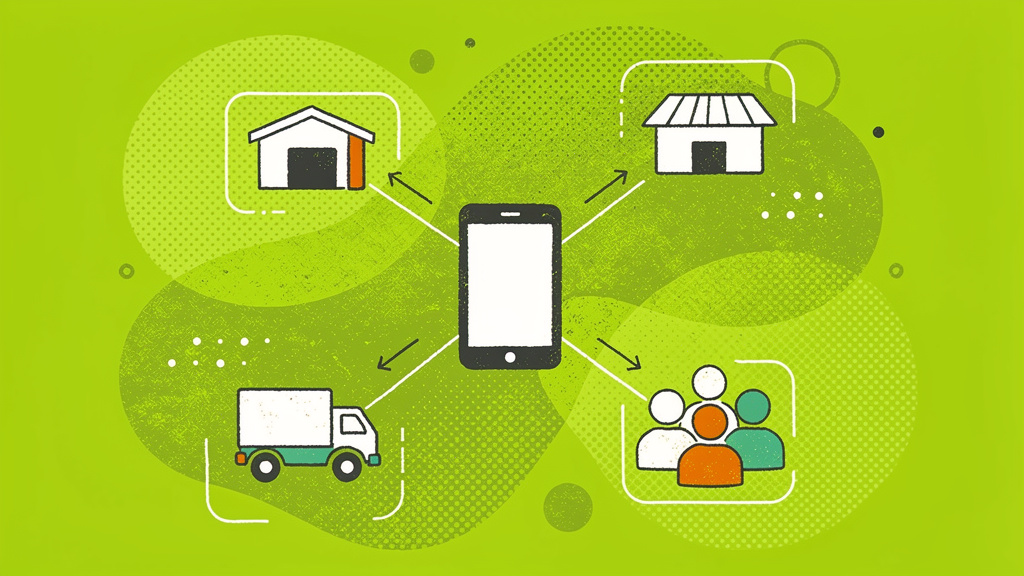
So here’s the thing about modern humanitarian aid: we’re still shipping blankets halfway around the world when there’s a perfectly good blanket factory down the road from where they’re needed. Look, traditional in-kind aid (you know, collecting donations and physically shipping stuff overseas) made sense in a different era. But digital logistics and local procurement are changing the game, delivering faster, cheaper, and honestly, more relevant help to people who need it most.
In this piece, we’ll walk through why the old model drains your budget before aid even arrives, how digital tools and local sourcing flip that script, and what this shift actually looks like in practice. Plus, we’ve learned some things from working with thousands of nonprofits over the past decade that might save you some headaches.
The Real Price Tag of Shipping Stuff Across Oceans
Here’s a number that’ll make you wince: logistics eats up to 40% of humanitarian budgets (FreightAmigo). And it’s not even fast. In-kind shipments from the US take 14+ weeks longer than alternatives (Cornell). When you’re responding to a crisis, every single day matters.
But the problems run deeper than slow boats:
- you’re accidentally crushing local economies: dumping foreign goods tanks local prices, which sounds great until you realize you’ve just bankrupted the farmers and vendors who’ll drive long-term recovery (Claire Barnhoorn),
- the stuff doesn’t fit: donated items expire, don’t match actual needs, or show up spoiled. That’s donor dollars in the trash (Emerald Insight),
- the paperwork is a nightmare: manual tracking creates 30-50% delays and the kind of overhead that makes your board meetings uncomfortable.
In Ukraine, Polish NGOs found themselves drowning in transport logistics for in-kind aid when local options would’ve involved communities directly and cost way less (Emerald Insight).
Protip: Before your next in-kind campaign, calculate total delivery costs including warehousing, transport, and staff time. You’ll likely find 40% of your budget vanishes before aid reaches recipients.
What We’re Hearing from Nonprofits in the Trenches
We’ve worked with thousands of organizations, and honestly, the same patterns keep showing up before they modernize their approach.
There’s the data disconnect. One disaster relief nonprofit collected amazing delivery data across five countries but kept it in spreadsheets scattered across different teams. When a major donor asked for impact metrics, they burned three weeks manually compiling reports and missed a critical grant deadline. Ouch.
Then there’s the overhead trap. An international aid org spent 38% of their budget on logistics for in-kind food shipments. Donors questioned their efficiency, even though they were serving thousands of families. The org couldn’t articulate why their model was inherently more expensive than digital alternatives because, well, they’d never really examined it. This inefficiency raises critical questions about optimizing global aid for developing countries, as traditional models may hinder the impact of resources meant to alleviate poverty. By exploring innovative approaches and leveraging technology, organizations could streamline their operations and enhance the effectiveness of their programs. Ultimately, rethinking strategies is essential to ensure that aid reaches those who need it most without unnecessary overhead.
And pilot paralysis? We see this constantly. A mid-sized nonprofit wanted to try local procurement but worried about losing institutional donors who’d funded in-kind programs for years. They delayed for 18 months while competitors demonstrated better outcomes with cash transfers and local sourcing.
These aren’t failures of commitment. They’re capacity challenges that technology solves, which is exactly why modernizing matters more than maintaining tradition.
How Digital Logistics Actually Changes the Game
Digital platforms cut response times by up to 40% through real-time visibility (FreightAmigo). We’re talking cloud-based tracking, AI analytics for predictive demand forecasting, and coordinated efforts across multiple organizations.
| Traditional Logistics | Digital Logistics | Impact |
|---|---|---|
| Manual tracking, 30-50% delays | Real-time GPS & alerts | 40% faster delivery (FreightAmigo) |
| High admin overhead | Automation & analytics | 25% cost savings (FreightAmigo) |
| Poor visibility | End-to-end dashboards | Boosted donor trust |
The UN OCHA notes 300M+ people needed aid in 2025, yet funding gaps hit $56 billion (FreightAmigo). Digital tools optimize scarce resources by cutting waste and improving coordination.
In 2024, 78% of supply chains achieved cost-efficiency, up 17% through combining digital and local procurement (HELP Logistics). That’s not a marginal bump. That’s a complete shift.
Why Buying Local Makes So Much Sense
Local and regional procurement slashes costs by over 50% for grains and shortens delivery chains (Cornell). It boosts local economies, ensures cultural fit, and speeds aid. For US nonprofits pursuing localization goals aligned with Grand Bargain commitments, this is the sweet spot.
Check out these numbers:
- 62% time savings (nearly 14 weeks) versus US transoceanic shipments in a 9-country study (Cornell),
- reduced transport and warehousing costs, freeing up your org to be more agile (Emerald Insight),
- supports dignity: cash vouchers or local purchases meet exact needs rather than forcing people to accept whatever shows up.
Refugees International found that local suppliers deliver cost-efficiently while strengthening regional markets (Refugees International). It’s a win that keeps winning.
Protip: Audit potential suppliers using Grand Bargain frameworks. Aim for 25% local spend to unlock specialized grants focused on localization and demonstrate compliance with international humanitarian standards.
Want to Analyze Your Current Approach? Try This AI Prompt
Copy and paste this into ChatGPT, Claude, Gemini, or whatever AI tool you’re using to get a quick analysis of your programs:
I run a humanitarian nonprofit currently using [SPECIFY: in-kind donations/local procurement/mixed approach]. Our average delivery time is [SPECIFY: weeks/months] and logistics represent [SPECIFY: percentage]% of our program budget. We serve [SPECIFY: region/country/crisis type]. Analyze the potential cost and time savings if we shifted to 50% digital logistics platforms and local procurement. Include specific risks we should anticipate and a 6-month implementation roadmap.For daily operational efficiency, consider solutions like Funraise that embed AI functionality directly where you work, providing full context of your fundraising data, donor patterns, and program funding without switching between platforms.
What’s Actually Working in the Field
In Ukraine, Polish NGOs shifted to local procurement and cash transfers, cutting supply chain costs dramatically compared to rigid in-kind models (Emerald Insight). Communities became active participants instead of passive recipients, which changes everything about long-term recovery.
A Cornell study comparing US local procurement versus traditional in-kind aid found over 50% grain cost savings, even in coastal Kenya where shipping should theoretically be easier. Delivery was 11+ weeks faster (Cornell).
The 2025 digital pilots through IRC’s Geneva workshop reimagined supply chains with shared infrastructure, letting smaller nonprofits access enterprise-level logistics coordination (World Economic Forum). That’s the kind of innovation that levels the playing field.
“The organizations that will lead humanitarian work in the next decade aren’t those with the biggest warehouses. They’re the ones leveraging digital tools to put resources directly into affected communities’ hands, faster and more efficiently than ever before.”
Funraise CEO Justin Wheeler
The Tech Connection: Data-Driven Operations Scale Impact
While Funraise isn’t a logistics platform, the principles are identical: data-driven operations scale impact. Nonprofits using Funraise’s analytics tools raise 7x more online annually (Sisense). The platform demonstrates 73% average online revenue growth (3x the industry standard) by turning scattered data into actionable intelligence (Funraise).
Here are the capacity-building parallels:
- 50% donation form conversion rates enable quick funding for agile local purchases (Funraise),
- 52% recurring revenue growth stabilizes operations versus in-kind aid’s boom-bust cycles (Funraise),
- 12% higher donor retention through transparent dashboards, which is essential when overhead scrutiny intensifies (Sisense).
Here’s the critical insight: 90% of nonprofits collect data, but only 5% actually use it strategically (Funraise). Whether you’re optimizing humanitarian logistics or fundraising operations, unused data represents wasted capacity.
Protip: Use dashboard-style reporting to track procurement ROI. When presenting to your board, show side-by-side comparisons of cost-per-beneficiary for in-kind versus local procurement. Visual data wins budget arguments.
AI-Powered Hybrid Models (Yes, We’re Going There)
The cutting edge combines AI predictive analytics with local fintech voucher systems. This anticipates needs, optimizes delivery routes, and scales cash assistance while completely bypassing traditional in-kind pitfalls.
Predictive AI boosts supply chain resilience, according to Jordan-based studies applying machine learning to refugee assistance (IIETA). Meanwhile, private sector fintech innovations scale cash and voucher assistance, though humanitarian pilot programs still lag behind commercial applications (World Economic Forum).
US nonprofits can lead this innovation by pairing tools like Funraise’s AI capabilities with humanitarian logistics platforms. The World Economic Forum and IRC envision shared digital infrastructure for agile supply chains by 2030, but early adopters gain advantages now (World Economic Forum).
Your Practical Roadmap (Let’s Get Specific)
Step 1: Assess your baseline. Map current in-kind costs using the 40% logistics benchmark (FreightAmigo). Include hidden costs like staff time, warehousing, and spoilage. Be honest. It’s probably worse than you think.
Step 2: Pilot digital tools. Track one shipment or program with real-time platforms, targeting 25% cost savings (FreightAmigo). Document what works and what doesn’t.
Step 3: Shift 25% to local procurement. Vet regional suppliers, experiment with cash transfers for culturally appropriate aid (Claire Barnhoorn). Start small so you can course-correct quickly.
Step 4: Integrate your data systems. Unify logistics, impact metrics, and fundraising data for comprehensive donor reporting. This is exactly what platforms like Funraise enable for the revenue side (Sisense).
Measure rigorously. Organizations adopting these approaches achieved 77% improvement in timeliness during 2024 (HELP Logistics). That’s the kind of number that wins grant renewals.
This approach scales operations while proving that impact matters more than artificially low overhead percentages.
What the Numbers Actually Tell Us
| Aid Method | Time to Delivery | Cost Savings | Source |
|---|---|---|---|
| In-Kind (Transoceanic) | 14+ weeks | Baseline (40% budget to logistics) | Cornell |
| Local Procurement (Grains) | 62% faster | Over 50% | Cornell |
| Digital-Optimized Local | Real-time tracking | 20-30% transport/admin reduction | FreightAmigo |
| Cash/Vouchers | Immediate | Eliminates warehousing, shortens chains | Emerald Insight |
These aren’t marginal improvements. They’re transformational shifts that free up resources for direct program delivery.
Where We Go from Here
Look, the humanitarian sector is at a crossroads. Traditional in-kind aid satisfied an earlier era’s logistics limitations and donor preferences. But 300 million people need assistance in 2025 amid massive funding gaps (FreightAmigo). We can’t afford waste anymore. To address these challenges effectively, organizations must adopt modern philanthropic strategies for nonprofits that leverage technology and innovative partnerships. Emphasizing transparency and impact measurement will not only build donor trust but also drive sustainable solutions. By aligning resources with unmet needs, we can create a more resilient support system for those affected.
Digital logistics and local procurement aren’t just buzzwords. They’re evidence-based approaches delivering faster, cheaper, more dignified assistance. For US nonprofits facing donor scrutiny over overhead and impact, these methods prove that efficiency and effectiveness actually align.
The technology exists. The evidence is clear. So the question becomes whether your organization will lead this shift or watch from the sidelines.
Start for free with tools like Funraise to build the data infrastructure and donor intelligence that funds your transition to modern humanitarian methods. No commitments required, just capacity-building that turns good intentions into measurable, scalable action.
Because in 2025 and beyond, the nonprofits that thrive won’t be those clinging to traditional models. They’ll be the organizations brave enough to prove that real impact matters more than comfortable habits.
About the Author


Beginner's Guide to Claiming Your Nonprofit Property Tax Exemption
Look, property tax exemptions might be one of the most overlooked opportunities in the nonprofit world. While you're busy optimizing overhead ratios and perfecting donor acquisition strategies, there's this straightforward way to redirect thousands of dollars annually toward your actual mission. We're talking serious money here. Back in fiscal year 2009, U.S. property tax revenues…

Sustainable Scaling: Balancing Burn Rates and Long-Term Operational Efficiency in Growing Nonprofits
Sustainable Scaling: Balancing Burn Rates and Long-Term Operational Efficiency in Growing Nonprofits Growth feels like success. More programs, more staff, more impact, right? But here's the uncomfortable truth: unchecked expansion is draining nonprofits dry. When your burn rate outpaces your revenue, you're not scaling sustainably. You're building a house of cards. At Funraise, we've spent…

The 2026 Safety-First Checklist for Domestic Violence Charities: Protecting Beneficiaries in a Digital Age
Look, here's the thing: abusers don't just weaponize phone calls anymore. In 2026, they're using IoT devices, AI-powered deepfakes, and sophisticated stalkerware to maintain control over survivors even after they've physically escaped. For domestic violence charities, this reality demands more than well-meaning safety talks. It requires concrete, technology-driven protocols that actually protect the people you…