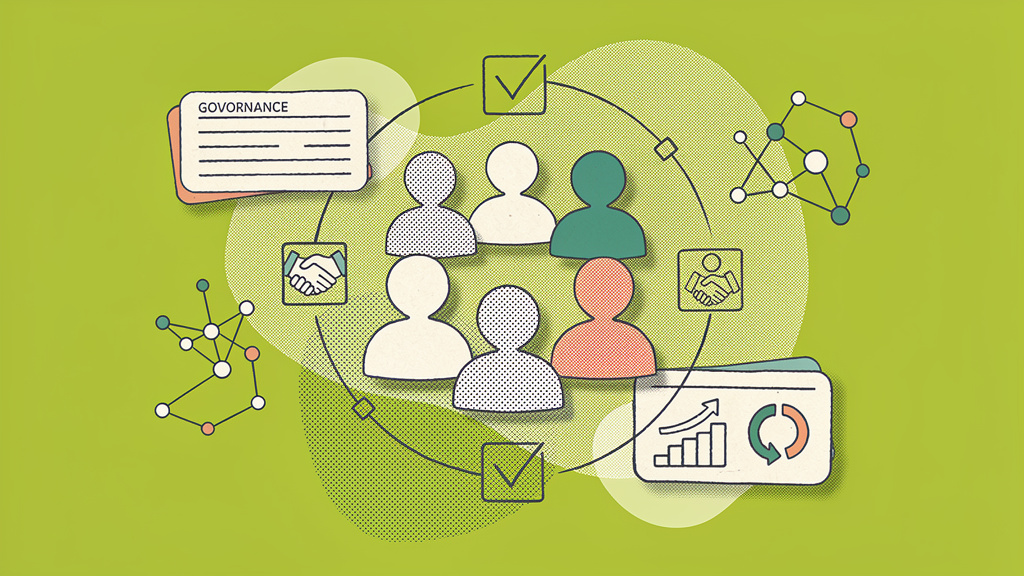
So you’ve recruited some stellar new board members. Congrats! But here’s the thing: bringing talented people onto your board is just step one. The real magic happens when you turn those good intentions into actual readiness to lead and deliver results.
We’ve found that the difference between boards that genuinely drive impact and those that just check boxes comes down to onboarding. Not the “here’s a binder, good luck” kind, but the structured, tech-enabled approach that sets directors up to actually move your mission forward from day one.
Why Strategic Onboarding Drives Real Impact
Look, poor onboarding doesn’t just leave new board members feeling lost. It actively drains your organizational capacity through disengagement and turnover. Only 45% of nonprofit board members feel their onboarding properly prepared them for effectiveness (501C Trust). Even more telling? Just 53% experienced any defined process at all (501C Trust). That’s a massive gap undermining governance when you need it most.
Strong onboarding does the opposite. It aligns members with your mission, boosts fundraising capacity, and sharpens oversight. And considering boards spend an average of 172 hours per year per member (501C Trust), that early preparation becomes absolutely essential for productivity. In our experience at Funraise, we’ve seen clients grow online revenue 73% year-over-year (Funraise Growth Stats). Well-onboarded boards accelerate this trajectory by championing tech-driven fundraising and pushing for data-informed decisions.
Protip: Calculate the opportunity cost of unprepared board members. At 172 hours annually, ineffective directors waste thousands in equivalent staff time that could drive programmatic impact.
Pre-Onboarding Preparation: Build Your Foundation
Assign an onboarding owner—typically the board chair or governance committee—to develop a structured framework before new members even arrive. We’re talking a realistic timeline with 4-6 interactive 90-minute sessions spread over several weeks, covering mission alignment, financial literacy, and governance fundamentals (Boardable, Successful Nonprofits).
Gather your core documents into a digital board manual for instant, secure access. Your essential materials include:
- mission, vision, strategic plan, and bylaws (Boardable),
- financial reports, budgets, and fundraising performance dashboards (Boardable),
- board policies covering conflict of interest, attendance expectations, and term limits (Boardable),
- committee descriptions, organizational charts, and recent meeting minutes (Boardable, Funraise Build a Better Board).
| Document Category | Key Items | Strategic Purpose |
|---|---|---|
| Organization Basics | Mission/vision statements, history, program descriptions | Builds mission buy-in and context |
| Governance | Bylaws, policies, committee roles, attendance expectations | Clarifies duties and accountability |
| Financials | Audits, budgets, fundraising KPIs, donor trends | Enables informed oversight |
| Operations | Staff org chart, annual calendar, technology tools | Facilitates effective collaboration |
| Legal | D&O insurance, fiduciary duties documentation | Mitigates risks, protects organization |
Use integrated platforms that reduce administrative overhead. Funraise users tell us they’ve streamlined board reporting in ways that free up capacity for impact-focused strategy rather than manual data compilation. You can start exploring these efficiencies for free at funraise.org with zero commitments.
Welcome and Orientation Phase
Kick off with a personalized welcome packet sent immediately upon board acceptance. Include a bio form for new members to share skills, networks, and interests so you can tailor committee assignments from day one (Private Company Director).
Host a comprehensive 90-minute orientation session, whether virtual or in-person. Introduce key staff members, provide facility tours (or virtual equivalents for distributed teams), and review concrete expectations. Thriving boards maintain 88% attendance rates (BoardSource Nonprofit Governance Index 2012), so establish this benchmark early.
Pair each newcomer with a board buddy or mentor for structured check-ins before and after their first meetings (Private Company Director, BoardEffect). This personal connection dramatically reduces anxiety and speeds up cultural integration.
Plus, foster genuine connections through bio sharing and informal gatherings. Diverse boards reflecting the communities they serve enhance decision quality and organizational legitimacy (Funraise Build a Better Board).
Protip: Schedule the mentor’s first check-in within 48 hours of orientation. This immediate touchpoint prevents new directors from feeling abandoned during their first independent review of materials.
Common Challenges We See Daily
At Funraise, we work with thousands of nonprofit leaders navigating board development. Here are situations we encounter regularly that signal onboarding gaps:
The “Manual Data Swamp” Syndrome: Executive Directors spending 15+ hours before each board meeting manually compiling reports from disconnected systems. New board members receive static PDFs that are outdated by meeting time, making informed governance basically impossible.
The Silent Expertise Problem: Highly skilled professionals join your board but disengage within six months because nobody identified their specific talents during onboarding. A CFO sits through generic presentations while your finance committee struggles with budget modeling.
The Compliance Panic: A board member’s first question at month three is “Wait, what are our fiduciary responsibilities?” This reveals that legal duties were never clearly explained. That knowledge gap creates organizational liability and director anxiety in equal measure.
These scenarios underscore why structured onboarding isn’t optional overhead. It’s infrastructure for scaling impact.
Training Sessions That Build Capacity
Deliver focused sessions that inform, inspire, and actually initiate action. Structure your training sequence like this:
Session 1: Mission & Programs – Interactive deep-dive with staff Q&A, site visits, and beneficiary stories (Successful Nonprofits) As we explore the landscape of nonprofit job opportunities in 2026, it is essential to understand the evolving needs of the sector. Many organizations are prioritizing diversity, equity, and inclusion initiatives in their hiring processes. Furthermore, technological advancements are creating novel roles that cater to a more digitally savvy workforce.
Session 2: Finance & Fundraising – Review key performance indicators, assign personal giving expectations, explore donor acquisition costs (Boardable)
Session 3: Governance & Committees – Role-play board decisions, cover fiduciary duties of care, loyalty, and obedience (Funraise Build a Better Board)
Session 4: Strategy & Impact – Hands-on technology demonstration showing real-time dashboards tracking mission outcomes (Funraise Growth Stats)
The completion challenge is real: only 35-50% complete multi-session processes, but completers become your most committed advocates (Successful Nonprofits). Combat attrition through engaging formats, clear timelines, and accountability structures.
Consider gamifying the experience with practical homework like shadowing a program or conducting a mock donor call. Issue completion certificates that recognize commitment, especially important amid 12-13% annual C-suite turnover (Flourishing Vitality) that increasingly affects board stability.
AI-Powered Onboarding Acceleration
Copy and paste this prompt into ChatGPT, Claude, Gemini, or Perplexity to generate customized onboarding materials:
"Create a personalized 90-day onboarding plan for a new nonprofit board member with the following context:

[ORGANIZATION_TYPE] (e.g., youth services, environmental conservation, healthcare access)

[BOARD_MEMBER_EXPERTISE] (e.g., financial auditing, marketing, legal compliance)

[CURRENT_ORGANIZATIONAL_PRIORITY] (e.g., scaling programs, diversifying revenue, improving retention)

[BOARD_SIZE_AND_MEETING_FREQUENCY] (e.g., 12 members meeting monthly)

Include specific learning objectives, recommended readings from our sector, mentorship check-in questions, and committee assignment recommendations that leverage their skills while addressing our priority. Format as a week-by-week action plan."
While AI tools provide excellent starting frameworks, purpose-built solutions like Funraise integrate these capabilities directly into your fundraising workflow with full organizational context. This eliminates the context-switching that drains productivity and ensures your board sees live data, not AI hallucinations.
“Boards that understand their organization’s data can make decisions that multiply impact. When directors see real-time fundraising performance and donor engagement metrics, they shift from reactive oversight to proactive strategy.”
Funraise CEO Justin Wheeler
Mentorship and First Meeting Integration
Formalize your mentorship program by matching skills to committee needs. Finance professionals mentor audit committee prospects, development experts guide fundraising committee members (Private Company Director, BoardEffect). Structure bi-weekly 30-minute check-ins for the first three months.
At the inaugural board meeting, facilitate round-robin introductions that include each person’s role and relevant background. Review manual highlights collaboratively rather than assuming everyone did the pre-reading. End with specific, trackable action items assigned to committees (Boardable).
Try this unconventional approach: host a “mission immersion day” combining half-day volunteering with data review sessions. New members experience programs firsthand, then analyze outcome metrics showing impact. This builds emotional and intellectual commitment faster than traditional meetings, mirroring the engagement strategies that drive recurring donor relationships (Successful Nonprofits, Funraise Build a Better Board).
Protip: Record orientation sessions (with permission) for asynchronous access. Board members managing professional demands appreciate flexibility, and recordings become onboarding assets for future cohorts.
Ongoing Engagement and Continuous Improvement
Schedule structured feedback loops at 30, 60, and 90 days using brief surveys. Assess understanding of organizational culture (51% of directors report initially missing cultural nuances (501C Trust)) and governance mechanics like CEO evaluation processes.
Embed technology for sustained impact through dashboards providing real-time KPIs. This aligns with data showing Funraise clients achieve 3x industry growth rates (Funraise Growth Stats) when boards actively use performance analytics for strategic decisions rather than relying on quarterly static reports.
| Engagement Tactic | Recommended Frequency | Success Metrics |
|---|---|---|
| Mentor Check-Ins | Bi-weekly for first 90 days | Confidence scores, question resolution time |
| Committee Assignment | Immediately post-orientation | Active participation rate, deliverable completion |
| Impact Reporting Review | Quarterly board meetings | KPIs met (revenue growth, program outcomes) |
| Board Self-Evaluation | Annual | Attendance >88%, strategic contribution ratings |
Conduct annual self-assessments that evaluate individual and collective board performance. Use results to refine both onboarding processes and ongoing governance practices.
Avoiding Critical Pitfalls
Don’t default to “sink-or-swim” approaches. 40% of board members lack adequate staffing insights (501C Trust). Fix this through structured staff meet-and-greets and organizational chart reviews during orientation.
Address diversity gaps proactively. With only 30% of boards approaching gender parity (501C Trust) and similar challenges across racial and socioeconomic dimensions, prioritize inclusive recruitment that reflects the communities you serve (Funraise Build a Better Board).
Prevent burnout amid the 172-hour annual commitment (501C Trust) by capping session lengths, celebrating wins publicly, and demonstrating that board time drives measurable outcomes rather than bureaucratic overhead.
Protip: Audit your onboarding process annually against BoardSource checklists (BoardSource Nonprofit Board Orientation Checklist), adapting for your organizational scale and evolution. What worked for 10 board members won’t serve 15.
Technology as Onboarding Infrastructure
Leverage board management software for centralized manual access, agenda distribution, and metrics dashboards. This reduces executive director prep time and enables remote participation, vital as 64% of directors note rising governance demands (501C Trust, BoardEffect).
Purpose-built nonprofit platforms like Funraise integrate donor data, campaign performance, and impact reporting into unified dashboards. This helps boards focus on strategy rather than spreadsheet compilation. Organizations using integrated systems report more predictable revenue and higher staff satisfaction (Funraise Growth Stats, Funraise Nonprofit Trends 2026).
Start exploring these capacity-building tools at funraise.org. The free tier lets you test functionality without budget commitments, proving technology investments deliver returns beyond overhead reduction.
Measuring Onboarding Success
Track concrete metrics: completion rates (target 100% of required sessions), engagement indicators (committee involvement within 60 days), and outcome measures (fundraising contributions, strategic initiative leadership). Boards with robust onboarding processes consistently report higher productivity and retention (Successful Nonprofits).
Compare your results against sector benchmarks. For example, boards maintaining 88%+ attendance (BoardSource Nonprofit Governance Index 2012) and completing structured orientation show measurably stronger organizational performance.
Use these insights to iterate your approach annually. Small refinements compound into significant capacity gains.
From Checklist to Culture
This process transforms good intentions into accountable action. By implementing these steps iteratively (starting with pre-onboarding preparation, delivering focused training, embedding mentorship, and leveraging technology) you build boards that propel mission forward through informed, engaged governance.
The gap between well-intentioned board recruitment and actual director effectiveness closes through systematic onboarding that proves real impact matters more than checking compliance boxes. Start strengthening your board infrastructure today, and watch how prepared directors multiply your organization’s capacity to deliver measurable community outcomes.
About the Author


Why You Should Update Your Conflict of Interest Policy Nonprofit Guidelines Yearly
Governance documents have a funny way of becoming digital relics. You draft them with the best intentions, file them somewhere sensible, and then life happens: programs expand, board seats turn over, funding landscapes shift, and that carefully written conflict of interest policy quietly gathers dust. Sound familiar? You're definitely not alone. In this post, we're…
12 Best Practices to Run a Nonprofit Board Meeting That Actually Gets Results
Let's be honest: most nonprofit board meetings could've been an email. Long updates, low energy, decisions that somehow never get made. Sound familiar? If you're nodding right now, you're in good company. The good news is that a few intentional shifts can completely change the experience, turning those sluggish sessions into focused, energizing gatherings that…

How to Recruit Board Members for Nonprofit Growth and Tech Adoption
Look, we've all seen it. The board that got your nonprofit to where it is today might not be the one that takes you where you need to go. And honestly, that's okay. As the pressure mounts to show real results (while everyone's still obsessing over your overhead percentage), you need board members who actually…