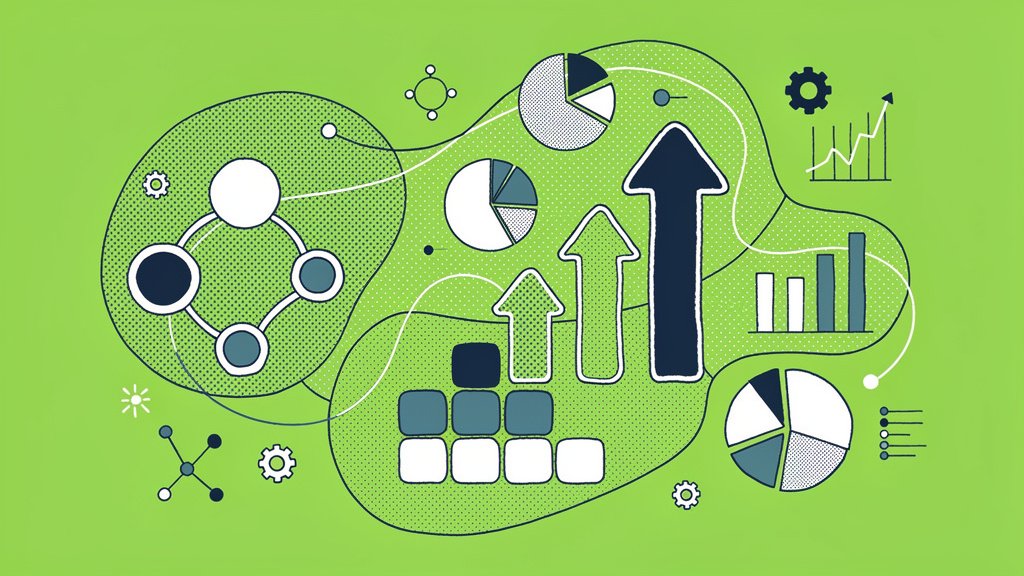
You know that feeling when you’re trying to build a house on quicksand? That’s what scaling a nonprofit without solid infrastructure feels like. And yet, here we are in 2026, with organizations everywhere trying to do exactly that.
Look, the nonprofits that’ll still be around a decade from now won’t necessarily be the ones with the purest missions or the most passionate founders. They’ll be the ones who built robust systems, strategic operations, and scalable processes that can actually support their growth. Capacity building isn’t some corporate buzzword we’re throwing around. It’s about creating the organizational muscle to multiply your impact without burning out your team or losing sight of why you started this work in the first place. As we look ahead to the future of nonprofits, it’s essential to explore effective fundraising strategies for nonprofits 2026 that align with these robust systems and scalable processes. Organizations will need to leverage technology, emphasizing digital engagement and donor cultivation to stay relevant in an ever-evolving landscape. By investing in innovative fundraising models, nonprofits can ensure their longevity and continue to make a meaningful impact in their communities.
The Foundation: What Capacity Building Actually Means
Capacity building strengthens five core areas: leadership pipelines, staff competencies, operational processes, technology infrastructure, and organizational culture. Here’s the thing, though. These aren’t separate improvement projects you tackle one by one. They’re interconnected systems that either lift each other up or drag each other down.
Leadership development starts with identifying your next generation of leaders and actually training them through structured mentorship and targeted workshops. Because key staff will move on. It’s not pessimistic, it’s just reality.
Staff training can’t be a one-and-done orientation day. We’re talking ongoing role-specific workshops, webinars, and certifications that actually improve what people do every single day.
And systems optimization? That means eliminating the administrative friction eating up hours each week. Streamline your workflows with integrated donor management software instead of juggling five disconnected tools and three different spreadsheets.
This foundation prevents the burnout cycle we see constantly (and honestly, it’s heartbreaking). Plus, it positions you to respond to whatever curveballs come your way, whether that’s federal funding cuts or unexpected opportunities.
Protip: Conduct a SWOT (Strengths, Weaknesses, Opportunities, Threats) analysis quarterly with your leadership team and board representatives. This simple exercise reveals capacity gaps before they become full-blown crises and creates accountability for actually addressing them.
Strategic Planning That Actually Guides Decisions
Okay, real talk. Too many strategic plans gather dust on shelves. We’ve all seen it. Effective plans align your mission with available resources while prioritizing programs with the highest impact potential over a 3-5 year horizon.
Break your planning into manageable phases:
| Phase | Focus | Key Actions |
|---|---|---|
| Assessment | Current state reality check | Evaluate fundraising effectiveness, staff capacity limits, technology stack gaps |
| Goal Setting | Vision alignment | Set specific revenue targets, donor retention goals, program expansion metrics |
| Implementation | Process building | Train teams on new systems, optimize workflows, establish accountability measures |
| Review | Continuous improvement | Quarterly metrics reviews, course corrections, celebrate wins |
Organizations using strategic plans consistently report clearer priorities and better resource allocation. And the proof shows up in results. Funraise users grew online revenue 73% year-over-year on average, which is 3x the industry benchmark (Funraise growth stats). That’s not luck or magic. That’s strategic capacity meeting opportunity.
Technology: Your Unfair Advantage for Scaling
Here’s what we see daily at Funraise: nonprofit leaders drowning in disconnected tools. One platform for email, another for donations, a third for event registration, spreadsheets for literally everything else. Staff waste hours manually transferring data between systems while critical donor insights get lost in the shuffle.
All-in-one platforms eliminate these silos. When fundraising, donor management, and analytics live in one integrated system, your team spends time building relationships instead of fighting with technology.
The data backs this up:
- peer-to-peer campaigns on integrated platforms raise $1,220 per fundraiser, which is 2x industry averages (Funraise data),
- automated recurring giving tools drive 52% year-over-year growth (Funraise growth statistics),
- AI-driven insights personalize donor engagement for higher retention rates.
Consider this: nonprofits using optimized donation forms see 50% conversion rates, far above industry norms (Funraise data). That enables rapid scaling without proportional increases in overhead.
In 2026, when just 19% of first-time donors give again, technology adoption isn’t optional. It’s survival. Start with Funraise’s free tier to test these capabilities with zero commitment before scaling up.
Protip: Test pop-up donation forms on your website. A/B tests consistently show 65.8% higher monthly giving value versus redirect-style forms. Integrate with Facebook for peer-to-peer campaigns and watch revenue lift by 83%.
AI Prompt: Your Personal Scaling Strategy Generator
Ready to create a customized capacity building plan? Copy and paste this prompt into ChatGPT, Claude, Gemini, or your preferred AI assistant:
I lead a nonprofit with [ANNUAL_BUDGET] annual budget and [TEAM_SIZE] staff members. Our primary mission is [MISSION_DESCRIPTION]. We currently struggle with [BIGGEST_CHALLENGE]. Create a 90-day capacity building action plan that addresses this challenge while strengthening our infrastructure for scaling impact. Include specific tactics, resource requirements, and success metrics.Simply replace the bracketed variables with your organization’s details. This generates actionable next steps tailored to your situation.
Note: While AI tools provide valuable strategic guidance, solutions like Funraise embed AI functionality directly in your fundraising workflow, giving you relevant insights at the exact moment you need them, with full context about your donors and campaigns.
Common Challenges We See (And How to Avoid Them)
The Reactive Revenue Trap
Organizations running campaign to campaign, always in emergency fundraising mode. Without diversified revenue streams, one grant denial or event cancellation triggers organizational crisis. The solution? Build predictable recurring giving programs before you desperately need them.
The “We’ve Always Done It This Way” Bottleneck
A dedicated long-term staffer controls a critical process but resists documentation or cross-training. When they leave or burn out, institutional knowledge walks out the door. Document processes ruthlessly and build redundancy into every critical function.
The Technology Graveyard
Purchasing new software without proper training or integration planning. Tools sit unused while staff revert to old spreadsheets. Success requires adoption planning: training, accountability, and killing old workflows that compete with new systems.
Network-Weaving: The Unconventional Scaling Approach
Stop trying to scale alone. Form “impact networks” with peer nonprofits serving similar populations or missions. Share resources like joint training programs, co-fundraising campaigns, or back-office services.
Washington Nonprofits documented that 58,000 organizations could leverage 580,000 board members collectively for massive capacity gains. That’s the power of networks over isolation.
The “pull” model of scaling adapts programs to local contexts rather than imposing cookie-cutter solutions. Involve community members early to customize interventions, dramatically reducing replication risks and boosting long-term sustainability. This approach prevents the common mistake of expanding a program that worked in one city into five cities where local conditions make it completely ineffective.
“The organizations that will thrive aren’t just thinking about their next campaign. They’re building infrastructure that turns every success into a repeatable system.”
Funraise CEO Justin Wheeler
Fundraising Capacity: Diversification as Risk Management
Shift from reactive campaigns to diversified revenue streams: recurring gifts, events, grants, corporate partnerships, and individual major donors. Each stream requires different capacity investments but provides crucial stability.
Consider this urgent reality: two-thirds of nonprofits rely heavily on volatile government grants. In 2026’s uncertain federal funding environment, diversification isn’t strategic. It’s existential.
The capacity-building investment pays off:
- recurring programs build predictable monthly revenue. Funraise clients grew these 52% annually,
- peer-to-peer campaigns expand reach without heavy staff investment,
- prospecting tools reveal donor capacity for targeted major gift asks.
Even during 2020’s chaos, organizations with strong fundraising infrastructure saw 77% online revenue growth (Funraise data). That’s what proper capacity building enables when crisis hits.
Human Capital: Your Most Important Investment
With 22,000+ nonprofit layoffs tracked in 2025, talent retention and development separate survivors from casualties. Invest in diversity, equity, and inclusion initiatives, comprehensive training programs, and succession planning before you need it.
Specific actions that work:
- diversify boards to enhance decision-making and community trust,
- create stretch assignments that build future leaders internally,
- establish peer learning networks to share best practices cost-effectively.
Remember: 37% of nonprofits consolidated operations recently. Proactive capacity building helps you avoid becoming that statistic.
Protip: Audit Google Workspace for Nonprofits or Microsoft’s nonprofit programs for collaboration boosts before investing in paid solutions. Pair these with Funraise’s reporting dashboards to track donor trends and campaign performance without additional analytics subscriptions.
Measuring What Matters: KPIs That Drive Decisions
Track metrics that actually indicate organizational health: donor retention rates, program outcome achievements, cost per dollar raised, and overhead efficiency. Dashboards should provide real-time insights on revenue growth, conversion rates, and ROI per fundraising channel.
The “re-engineering for scale” question reveals capacity gaps: What breaks when you 10x your operations? Your donation processing? Volunteer coordination? Program delivery? Identify these bottlenecks now and build systems that flex with growth.
Continuous measurement enables rapid adaptation. Organizations using data-informed decision-making consistently outperform peers, like the Funraise client who achieved 583% year-over-year online revenue growth by monitoring and optimizing based on real-time metrics.
Future-Proofing: Building Resilience Into Operations
The bifurcated nonprofit sector increasingly separates infrastructure-strong organizations from those barely surviving. Address underfunding and burnout by prioritizing unrestricted funds for operations, not just programs.
| Challenge | Capacity-Building Strategy | Expected Outcome |
|---|---|---|
| Funding Volatility | Diversify revenue + automate recurring giving | 52% recurring growth potential |
| Staff Capacity Gaps | Training networks + succession planning | Higher retention, institutional knowledge preservation |
| Scaling Risks | Local adaptation + community involvement | Sustainable expansion without mission dilution |
The path forward isn’t about working harder. It’s about building smarter. Nonprofit capacity building and scaling nonprofit impact require intentional infrastructure investments that compound over time. investing in technology, training, and organizational development is crucial for scaling nonprofit impact through infrastructure. By enhancing systems and processes, nonprofits can maximize their reach and effectiveness in addressing community needs. Ultimately, these strategic investments pave the way for sustainable change and greater overall impact.
So start where you are. Run that SWOT analysis. Test Funraise’s free platform to see how integrated technology changes your team’s daily reality. Document one critical process this week. Build one new partnership this quarter.
Good intentions aren’t enough (hence our blog name). Strategic capacity building turns them into measurable, scalable impact that changes communities. The organizations that recognize this in 2026 will be the ones still delivering mission in 2036.
About the Author

Beginner's Guide to Claiming Your Nonprofit Property Tax Exemption
Look, property tax exemptions might be one of the most overlooked opportunities in the nonprofit world. While you're busy optimizing overhead ratios and perfecting donor acquisition strategies, there's this straightforward way to redirect thousands of dollars annually toward your actual mission. We're talking serious money here. Back in fiscal year 2009, U.S. property tax revenues…
Modern Humanitarianism: Why Digital Logistics and Local Procurement Trump Traditional In-Kind Aid
So here's the thing about modern humanitarian aid: we're still shipping blankets halfway around the world when there's a perfectly good blanket factory down the road from where they're needed. Look, traditional in-kind aid (you know, collecting donations and physically shipping stuff overseas) made sense in a different era. But digital logistics and local procurement…
Sustainable Scaling: Balancing Burn Rates and Long-Term Operational Efficiency in Growing Nonprofits
Sustainable Scaling: Balancing Burn Rates and Long-Term Operational Efficiency in Growing Nonprofits Growth feels like success. More programs, more staff, more impact, right? But here's the uncomfortable truth: unchecked expansion is draining nonprofits dry. When your burn rate outpaces your revenue, you're not scaling sustainably. You're building a house of cards. At Funraise, we've spent…